
Rolling Shutters vs. Bahama Shutters: Which Is Right for Your Home?
Key Overview
- Rolling shutters cost around $25 to $30 per square foot (manual) and $60 to $70 per square foot (motorized).
- Bahama shutters cost around $200 to $500 per window.
- Roll-down shutters can withstand 150 to 200mph winds, meeting Florida Building Code (FBC) or Miami-Dade County standards.
- Rolling shutters are best if hurricane protection or motorized deployment is your priority.
- Bahama shutters are best if you just need daily shade and a coastal aesthetic.
Rollac’s customized solutions for residential and commercial shade offer hurricane-rated wind protection, with USA-made innovations since 1985. Get a free quote on Rollac rolling shutters today.
Deciding between Rolling Shutters vs Bahama shutters should be based on whether you want a shutter that hides away or is permanently out, and if you want a motorized or manual deployment.
Bahama shutters are a solution for daily shade, extending on hinges to allow some light in. They are manual use only and can’t hide away. Rolling shutters are more of a hurricane barrier, often deploying via a motorized system and hiding away when not in use.
What Are Bahama Shutters?
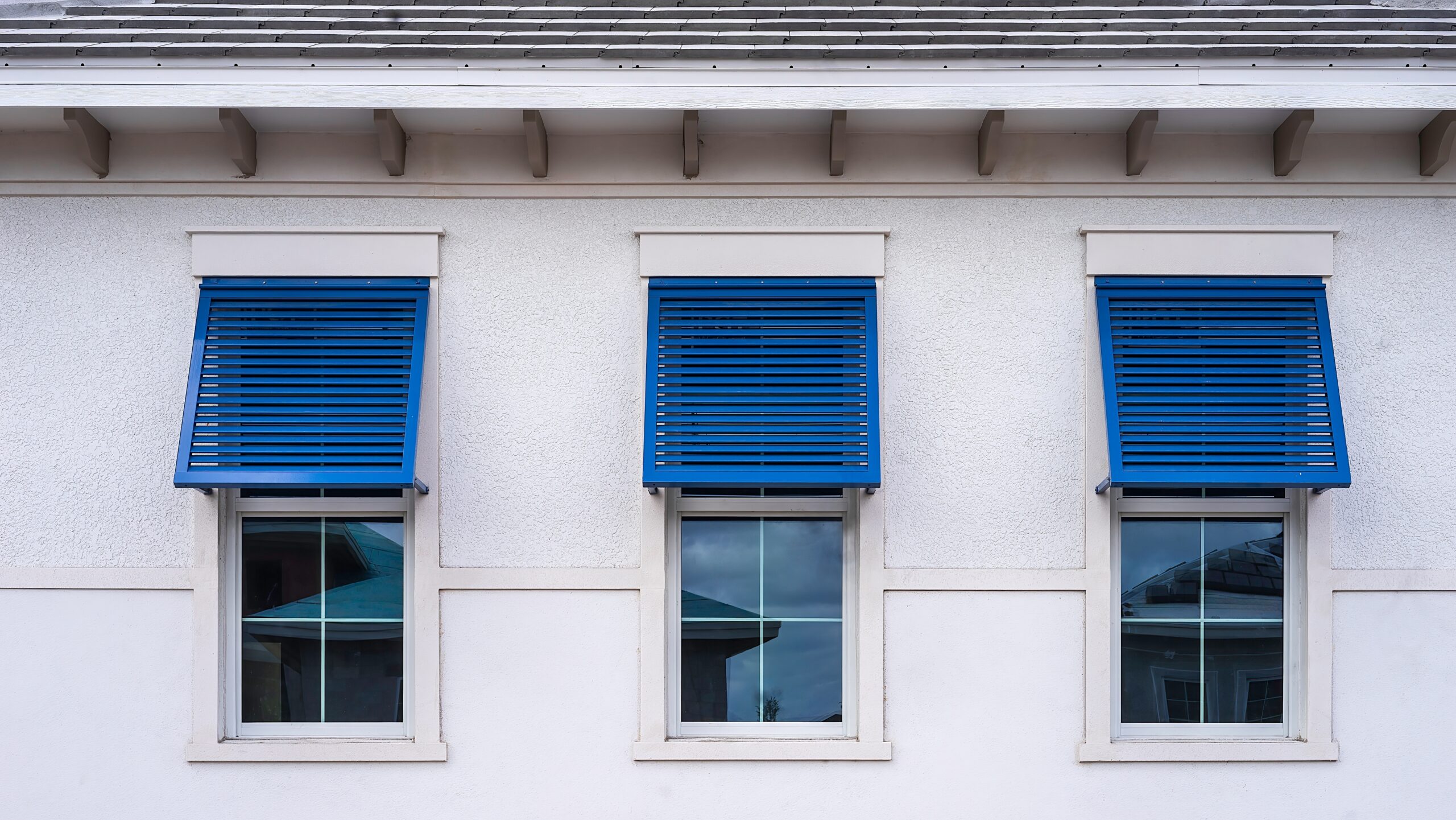
Bahama shutters are permanent exterior panels that operate via a top hinge, swinging open to allow increased light entry, airflow, and views, while still maintaining shade and privacy.
Manually deployed via a prop-arm, they can remain open as you wish. This makes them very popular for homes that face intense sunlight, but don’t want the full blackout effect of rolling shutters.
When not in use, bahama shutters can be closed up and latched to add a protective barrier from storms. But they can’t be hidden away.
While often made of wood, modern bahama shutters are often made of extruded aluminum and can meet Miami-Dade/FBC impact standards.
What Are Rolling Shutters?
Rolling shutters, or ‘roll-down shutters,’ are retractable exterior shutters that are deployed from a housing box above the window. Featuring aluminum slats with a foam core, they effectively create a tight and secure seal when closed, offering strong break-in and hurricane security, insulation, and UV protection.
Rolling shutters can be deployed both manually (via a crank) or motorized, with modern setups from Rollac offering automated options, such as via a smartphone device, timer, or storm-detection system.
This makes them ideal for property in hurricane-prone regions, or for holiday home owners who need strong window protection when they’re away for extended periods.
Rollac’s hurricane-rated roll-down shutters (SecuraMax) is ideal for security, with our residential rolling shutters (DuraComfort) designed for increased sound insulation.
Side-by-Side Comparison: Rolling Shutters vs. Bahama Shutters
The most notable differences between rolling shutters and Bahama shutters are:
- Rolling shutters offer strong storm protection by creating a tight, secure seal when in use. They hide away when not in use, via a motorized system.
- Bahama shutters are always visible, but can extend out to allow increased light entry. They are a better option for those who need everyday shade coverage.
|
Feature |
Bahama Shutters |
Rolling Shutters |
|
Design |
|
|
|
Cost |
|
|
|
Operation |
|
|
|
Storm-prep time |
|
|
|
Wind rating |
|
|
|
Security |
|
|
|
Shade/airflow |
|
|
|
View when open |
|
|
|
Energy efficiency |
|
|
|
Aesthetic |
|
|
|
Insurance discount eligible |
|
|
|
Best for |
|
|
Cost Comparison
Bahama shutters typically have a lower upfront cost, due to their manual and simple design. However, rolling shutters have a better energy ROI (at around 20% savings per year) despite the higher upfront cost.
Roll-down Shutters Cost:
- Manual systems: $25 to $30 per square foot of window space.
- Motorized systems: $60 to $70 per square foot of window space.
Bahama Shutters Cost:
- Around $200 to $500+ per window installed
- Varies with impact rating, blade configuration, and size.
Winner: Tie
Hurricane Protection & Wind Rating
Both rolling shutters and bahama shutters can help your home qualify for hurricane shutter insurance discounts if they are code-approved. Note that approval for the rating depends on the anchors and installation for both.
Rollac’s SecuraMax are rated to 150 to 200 mph, which are approved by Florida Building Code (FBC) or Miami-Dade County standards.
Rolling shutters achieve this rating by using interlocked aluminum slats and strong tracks that create a solid impact-resistant barrier. So when strong winds, debris, and robbers arrive, they can fight it off.
Bahama shutters don’t offer the same level of protection, but can still withstand some significant pressure changes and wind loads. But you should think of that as more of a bonus feature to their main quality, which is shade control (and not an extreme hurricane armor).
Winner: Rolling Shutters
Shade, Airflow & Curb Appeal
Bahama shutters are the more aesthetically pleasing option, offering all-day shade, airflow, and the sort of coastal look that many people love. As they sit at an angle, they’re more like a fixed shade awning than hurricane protection.
Rolling shutters, however, are more about function and protection. And that is clear with their visuals (although they hide nicely away in their housing when not in use).
When they’re down, they limit airflow considerably and block light entirely.
Winner: Bahama Shutters
Security & Privacy
Rolling shutters are by far the better option for security, but when it comes to privacy, the choice is close.
That’s because rolling shutters provide total security and privacy when closed, but bahama shutters provide a level of privacy at all times.
When rolling shutters are closed, the interlocking slats and end retention system will entirely block and deter intruders from entering. So, when you’re away from the property, you can rest assured knowing it’s very, very hard to break into.
Bahama shutters offer less security, but a good level of privacy. Neighbours and passers-by won’t be able to see into your window easily. They also act as a theft deterrent, but are not intrusion-proof.
Winner: Tie
Convenience & Storm-Prep Time
Retractable hurricane shutters, like rolling shutters, can deploy within just 1 minute with a motorized set-up. With a smartphone and automated option, you can even roll down all the shutters on your property at the same time. A roll-down shutter with a manual and crank system takes around 1 minute per window.
Bahama shutters are entirely manual and require you to go outside the window to lower and lock the arms in place. This makes them unusable for higher floors and a nuisance when you’re in a rush or a storm is arriving. However, in most cases, bahama shutters will be left in their open position for long periods.
If you’re concerned about protecting your home in a hurricane quickly, then roll-down shutters are the way to go. They can be deployed instantly with a motorized system and use a storm-detection system to prevent damage in advance.
Winner: Rolling Shutters
Energy Efficiency and Noise
Rolling shutter slats are filled with a foam that creates a thermal and acoustic barrier. This offers great sound insulation, while preventing heat from escaping during winter and entering during summer. Roller shutters can bring in energy savings of around 20%.
Bahama shutters, however, offer passive shading that modulate temperature, but not as effectively. There is no insulating seal, and their sound insulation is negligible.
Winner: Rolling Shutters
Which Hurricane Shutter Is Right for You?
Choose Bahama Shutters If…
We recommend Bahama shutters if your priority is:
- Daily shade and a coastal or tropical aesthetic.
- Not hurricane protection.
- You have a lower upfront budget.
- You don’t need or care for motorization.
Choose Rolling Shutters If…
We recommend roll-down shutters if your priority is:
- You want hurricane code-approved wind protection.
- You want a strong seal from intrusion.
- You want energy savings and noise reduction.
- You have hard-to-reach or upper-floor windows.
- You need a motorized system, with remote deployment.
Consider Both If…
You can go for a blend of rolling shutters and bahama shutters (such as rolling on higher floors) if:
- You want a tropical curb appeal on street-facing windows.
- You want increased security and convenience on hard-to-reach windows, or vulnerable openings.
The Bottom Line: Rollac’s Recommendation
Our opinion on bahama shutters vs roll down shutters is to think about your priorities.
It’s a fact that roll-down shutters offer better protection from hurricanes and intrusion, as well as year-round energy savings. For that reason, they’re a better long-term investment.
But, if you don’t need such substantial protection and are more concerned about the visuals – and most importantly, daily shade. Then you’ll be better off with bahama shutters and their curb appeal.
We welcome you to browse our collection of smart shading systems and hurricane solutions today and receive a free quote for an installation.
Read More:
- Learn more about Rollac’s hurricane-rated rolling shutters.
- Accordion vs. roll-down shutters
- Types and costs of hurricane shutters
- Impact windows vs hurricane shutters
FAQs on Bahama Shutters vs Rolling Shutters
Are Bahama shutters hurricane rated?
Bahama shutters can be hurricane rated, but it depends on the anchor type, material type, and installation. The best hurricane shutters for coastal home protection are rolling shutters.
Can Bahama shutters be motorized?
No. Bahama shutters use a prop-arm and manual deployment.
Which is cheaper, Bahama or rolling shutters?
Bahama shutters offer a cheaper up-front cost, of around $200 to $500 per window.
Do both qualify for insurance discounts?
Yes, both rolling shutters and Bahama shutters can qualify for hurricane shutter insurance discounts. But this depends on the product you’re getting, the anchor type, and installation method.
Which shutter is faster to close before a storm?
A rolling shutter with a motorized system is always faster than a Bahama shutter that will require you to go outside and close it up.