Waterproof Retractable Awning: All You Need To Know
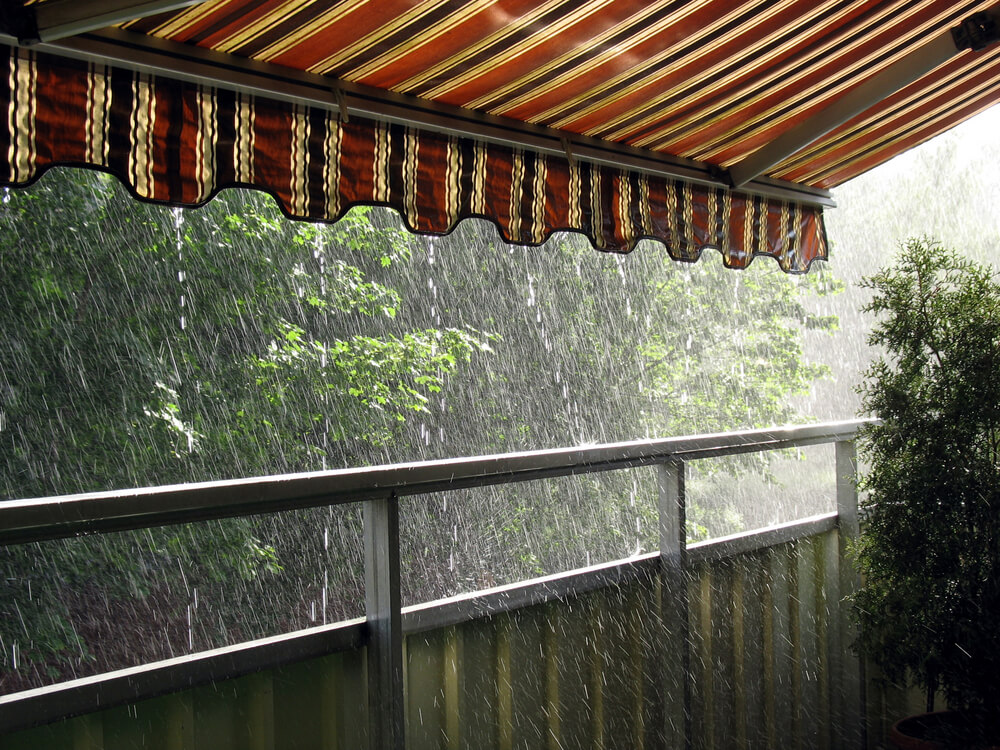
When you think of a retractable awning, you probably envision using it on sunny days to protect yourself from UV rays. However, there’s no doubt you’ll keep it extended when it begins to rain. If so, it’s best to have a waterproof retractable awning.
If you want to continue enjoying your outdoor patio even when rain, wind, or an occasional storm passes through, here is how our team at Rollac can help you get a reliable, rainproof awning that looks great, stands the test of time, and keeps you dry and comfortable.
Are Retractable Awnings Waterproof?
Generally speaking, a retractable awning will be waterproof and rainproof, at least to some extent. Though most awning fabrics in use today are water-resistant, the level of waterproofing you get depends on the material’s quality and whether it has a waterproofing coat.
Understanding the difference between waterproof and water-resistant is essential. For example, awnings that really are waterproof use materials like vinyl or laminated fabrics, creating a complete water barrier. Even though most retractable awnings are water-resistant, meaning they can handle light to moderate rain, they are not explicitly designed for prolonged downpours. Investing in a waterproof coating can help protect and improve the fabric over time.
If you want a waterproof awning for decks, particularly if you have a restaurant, it is best to purchase a retractable awning with a waterproofing coat, as this increases the awning’s longevity and makes it better suited for commercial use.
Waterproof vs. Water-Resistant: What’s the Actual Difference?
The terms waterproof and water-resistant are often used interchangeably, but they are not the same. A truly waterproof awning uses materials such as vinyl or laminated fabrics that create a complete barrier, preventing water from passing through even during sustained rain. These options are best suited to high-exposure or specific commercial settings.
Most retractable awnings, however, are water-resistant. Fabrics like treated polyester or acrylic are designed to repel light to moderate rain while remaining breathable and flexible for everyday use. This makes them ideal for normal outdoor conditions.
Rollac’s waterproof coating helps bridge the gap by improving rain protection, reducing moisture absorption, and extending fabric life without sacrificing performance or appearance.
Can I Use Retractable Awnings in the Rain?
Should you like sitting outside during a rain shower, a waterproof retractable awning will let you do so without any problem. However, be aware that a rainproof awning usually works best when light to moderate rain is falling, since this is how the awning was designed to be used under normal outdoor conditions.
A proper pitch or slope is also essential when using a retractable awning in the rain. A properly used pitch will allow water to drain away from the fabric instead of pooling on the surface, which places unnecessary strain on both the fabric and the frame. A flatter awning is more likely to collect water, increasing the risk of sagging or damage over time, hence the importance of a sufficient pitch.
If you love downpours, chances are your awning won’t. Even the best waterproof retractable awning can sustain damage in heavy rain. Rather than let this happen, we recommend you retract your awning and wait for conditions to improve slightly.
What About Motorized Awnings?
Thanks to the modern technology in our retractable awning here at Rollac, you can rest assured that you can use motorized awnings even when it is raining. When you have a motorized awning, remember that it can be controlled remotely or via an app on your smartphone.
Thus, even if you are not near your patio when a storm arrives, you can still quickly retract your awning to prevent damage.
Also, keep in mind that today’s state-of-the-art motorized awnings are usually equipped with wind sensors that automatically retract when wind speeds reach certain levels.
What is the Best Water-Resistant Awning Fabric?
The answer to this question can be tricky, since different awning fabrics may perform better in sunny conditions than in wet ones.
Here at Rollac, our retractable awning comes with a waterproofing coat that makes the fabric very resistant to water damage, stains, and mildew. In addition, the coating helps the fabric self-clean, but that doesn’t mean you won’t have to clean your awning yourself now and then.
As for which fabric type is best for your awning, we believe high-tech fabrics such as advanced polyester and acrylic fibers are the best choice for all types of awnings. In addition to offering high protection from the sun’s UV rays, these fabrics are also much more water-resistant, making them less likely to stain or develop mildew.
In general, polyester fabrics tend to offer stronger water resistance, followed by acrylic fabrics, while traditional canvas materials provide less protection in wet conditions unless heavily treated.
What is the Life Expectancy of a Retractable Awning?
The life expectancy of a retractable awning ranges from 5 to 15 years. This depends on multiple factors, including build quality and maintenance, as well as the weather it will be exposed to during its lifespan.
Higher-quality frames and fabrics, when used correctly, tend to last much longer. Retractable awnings that are checked often for signs of wear and tear see an extended lifespan. Also, waterproofing enhances overall durability by making it less likely for moisture to penetrate the fabric, helping prevent it from breaking down due to mold and mildew. Making sure it is installed according to the manufacturer’s instructions and retracting the awning during severe weather also helps extend its lifespan.
Common Problems with Retractable Awnings (And How to Avoid Them)
Many problems that can arise with a retractable awning can be prevented by ensuring it is set up correctly from the beginning. Several issues can occur if the setup is rushed or done incorrectly.
One is water pooling. This happens because the awning doesn’t have the correct pitch. Having the proper slope on the awning ensures that water can run away from the fabric efficiently during wet weather. If the fabric is wet when retracted, this creates the perfect breeding ground for mold and mildew, so ensuring the awning is fully dry before retracting it is vital.
Another issue that can arise is frame damage. This can happen very easily if the awning is left open in high winds. Remembering to retract the awning before the wind gets strong will help extend the frame’s life.
Fabric sagging can also be an issue that is easily avoided by buying quality, water-resistant materials and maintaining the waterproof coating.
How Can I Waterproof My Awnings?
If you want a rainproof awning and want to ensure it stays in good condition for many years to come, it is very easy to waterproof the existing awning on your patio or elsewhere.
Before applying the waterproofing coat to your retractable awning, thoroughly clean it with soap and water and a soft brush. Once you’re satisfied it’s ready, grab a spray bottle and fill it with a petroleum-based liquid waterproofing solution. However, when selecting a waterproofing solution, always verify that it is compatible with your awning’s specific fabric.
To achieve a water-tight seal, apply two coats of the solution to your awning. While you want to soak the fabric, you don’t want to overspray and have the solution running everywhere. Once you are done, we recommend letting it dry for four to six hours. As a final touch, grab your garden hose and spray your awning. If you notice little beads of water on the fabric, you’ve now got a waterproof awning.
Contact Us Today
When it’s waterproof retractable awning you want, our team here at Rollac can make it happen for your home or business. Rather than purchase retractable awning from someone else and hope it can withstand the next storm, put your trust in our awning experts. Contact us today.